
Minimalist decor trends 2026: the return to material and craft.
Some spaces don't shout. They don't accumulate and yet they achieve a presence that is felt immediately. In 2026, the trend in minimalist decor revolves around exactly that: the return to material and craft. Attention is no longer on ornament, but on the nobility of stable pieces. Objects where the texture of handwork, the density of form and the trace of craft are enough to articulate a room and give it its true scale.
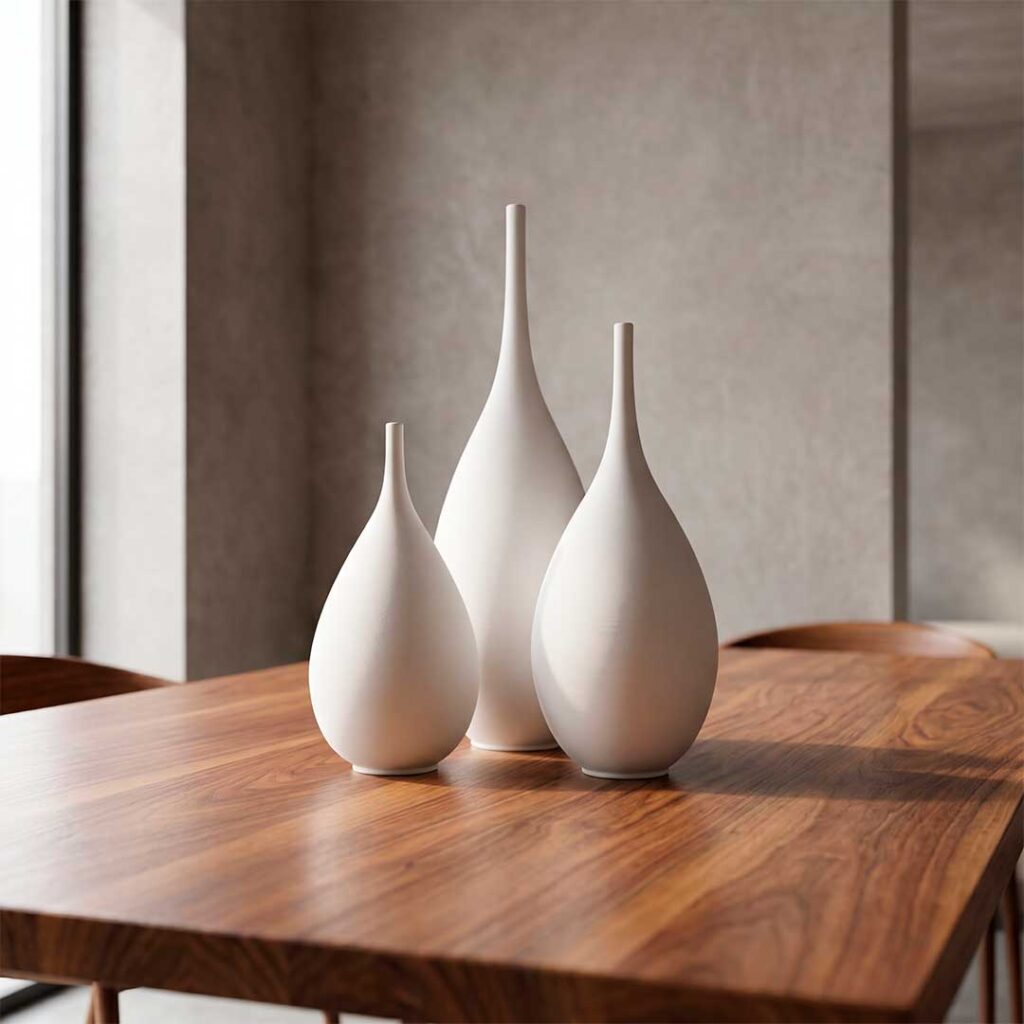
The nobility of matter in contemporary interior design
When a space does without ornament, value shifts entirely to the intrinsic quality of the material and the form. A piece of studio ceramics
needs no credentials; it is recognized in the density of its volume, in the vibration of its own glaze and in the firmness with which it plants itself in the interior decor.
The minimalist decor trends for 2026 consolidate this return to the essential. The view of local designers and interior designers is no longer after saturation, but balanced emptiness. The focus is on finding that one-of-a-kind piece that, by its scale and the trace of the workshop, can sustain the aesthetic tension of an entire room.
The 5 interior decor trends that will define 2026
1. Materials with tactile history
The handmade stoneware ceramics is returning to the place it always deserved. Not because of fashion, but because there is a real difference you can perceive: the weight in the hand, the texture of the glaze, the controlled imperfection no industrial piece can replicate.
The decorative vases in high-fired stoneware (1200°C (2192°F)) have a density and a presence that set them apart from any mass-produced object. They need no label. They explain themselves.
2. A restrained color palette: black, off-white, earth
Minimalist decor in 2026 works with extremely reduced palettes. Matte black. Off-white. Soft ochres. The tension between those tones creates depth without visual noise.
The modern vases in matte black glaze or with quartz textures are natural protagonists in this kind of setting. They blend in without competing and define without imposing.
3. Considered sets, not accumulation
The clearest trend: a group of pieces conceived as a single work, instead of five decorative objects gathered without judgment.
A set of three vases of different heights, made in the same firing and with the same glaze, works as a single articulated volume. They are not three objects: it is a composition. That takes more decision than filling a shelf, but the result is a room that communicates something specific.
4. Imperfect surfaces as a value
The perfect, industrial finish, identical in every unit, began to be read for what it is: mass production.
Interior decor in 2026 values the opposite: the trace of the process. The glaze variations that occur in the firing. The minimal differences in form from one piece to another. What used to be corrected is now sought out.
The handmade stoneware ceramics is, in that sense, the material of the moment. Every piece is literally unrepeatable.
5. The floor as a focal point
The large decorative vases placed on the floor are one of the strongest trends for interiors in 2026. A vase of 60 or 70 centimeters (24 or 28 in), resting on the floor of a large living room or in the foyer, organizes the space visually without needing any other element.
The key is proportion and material. A tall stoneware vase of those dimensions, with a quality glaze, can be the only decorative element an entire wall needs.
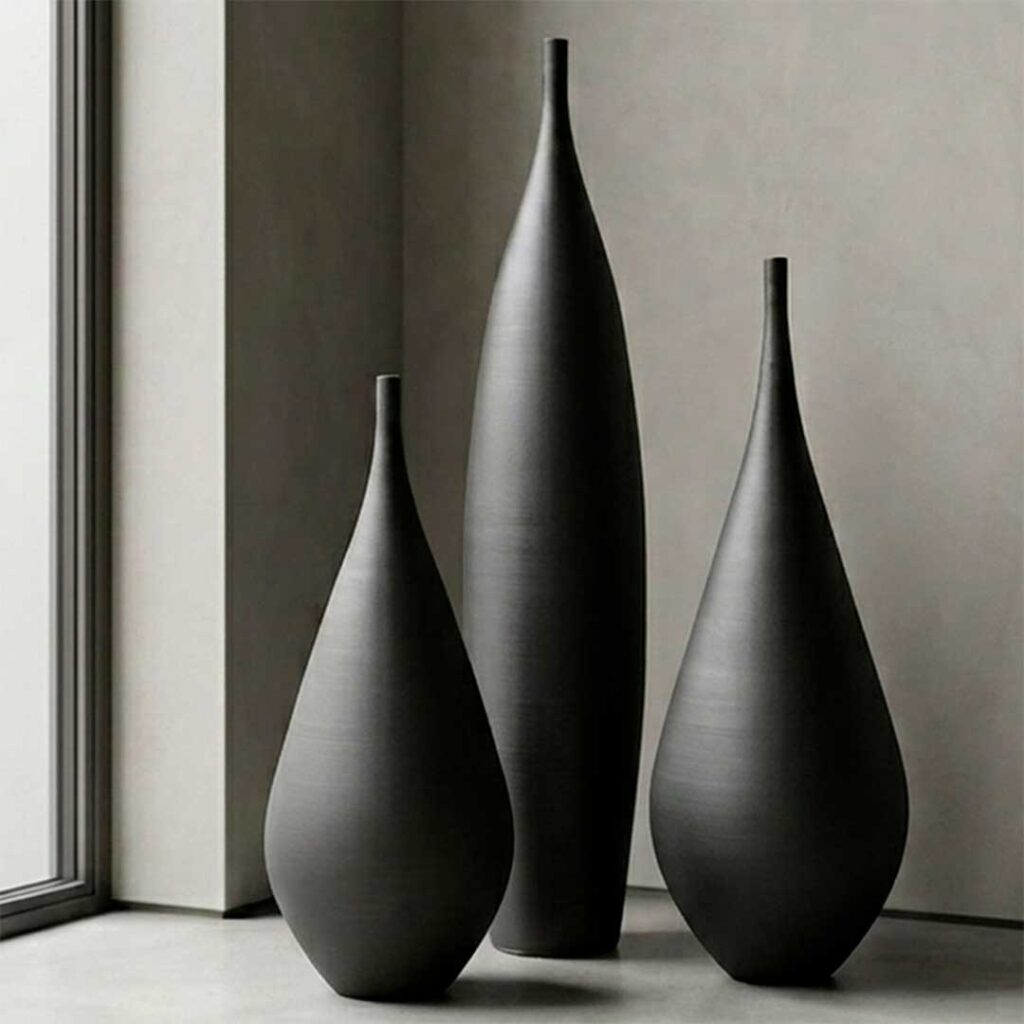
How to integrate restraint and craft into the space
You don't have to redesign everything. It is enough to start with a single decision.
Choose a piece that holds the room by itself. A modern vase in handmade stoneware ceramics on the living room floor, a studio sculpture on a clear coffee table or a design object in the foyer that catches the natural light as you enter.
The value of this perspective lies exactly in that: the certainty that what you chose deserves to occupy that place. It isn't filler or superfluous decoration; it is a volume with history, a physical process and a clear judgment behind it.
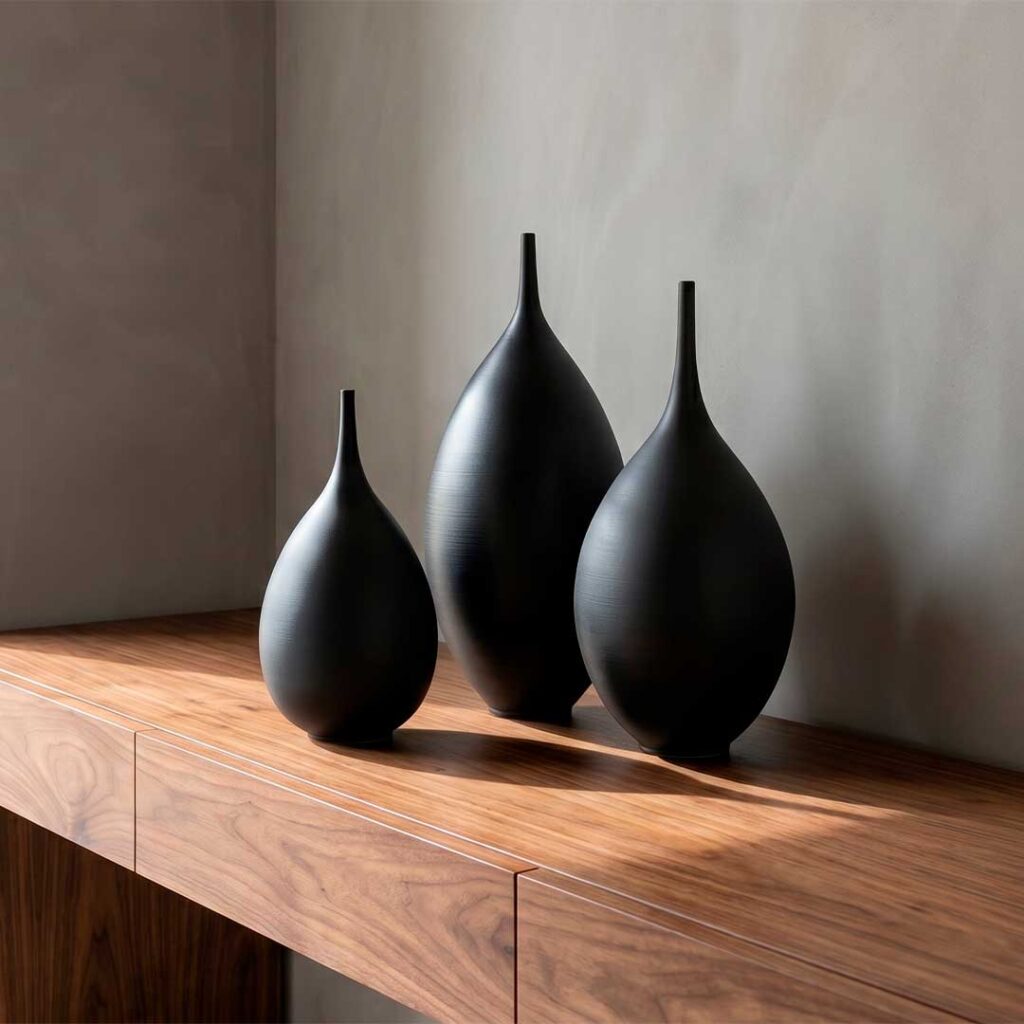
The value of time: technical rigor and quality in studio ceramics
Technical quality in high-temperature ceramics admits no shortcuts; it must be the direct result of repetition and meticulous observation over the years. Every vase that leaves the workshop carries that maturity: from the precise control of the material on the potter's wheel to the development of matte and satin glaze formulas. It is not about following a passing trend, but about mastering fire at 1200°C (2192°F) to achieve stable, dense pieces with a sought-after finish that only decades of craft can give.
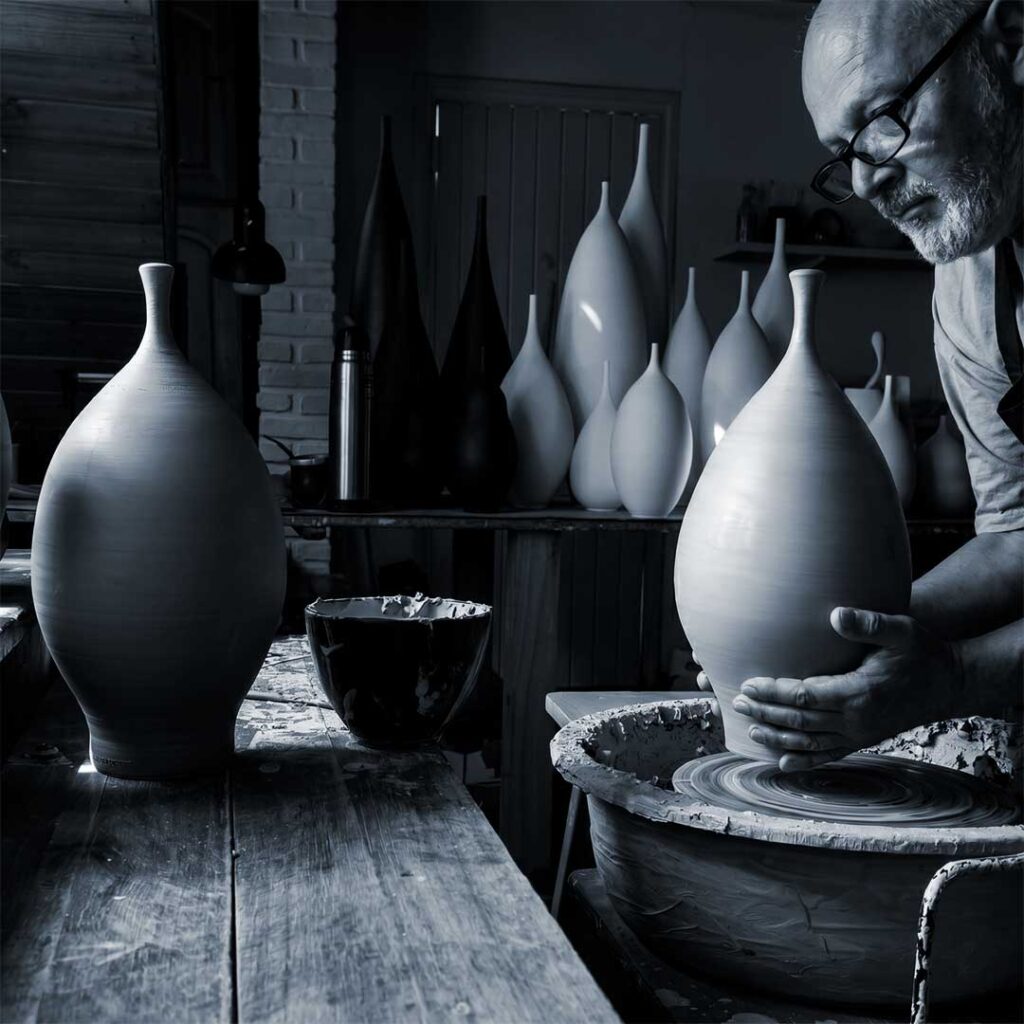
Experience in the ceramicist's craft is what turns an everyday object into a collector's piece. When you bring one of these works into a room, you are integrating a physical testimony of dedication and permanence. Every texture, every variation of the glaze under the light and every line that arose from improvisation on the wheel is made to converse subtly and definitively with the architecture of your home.
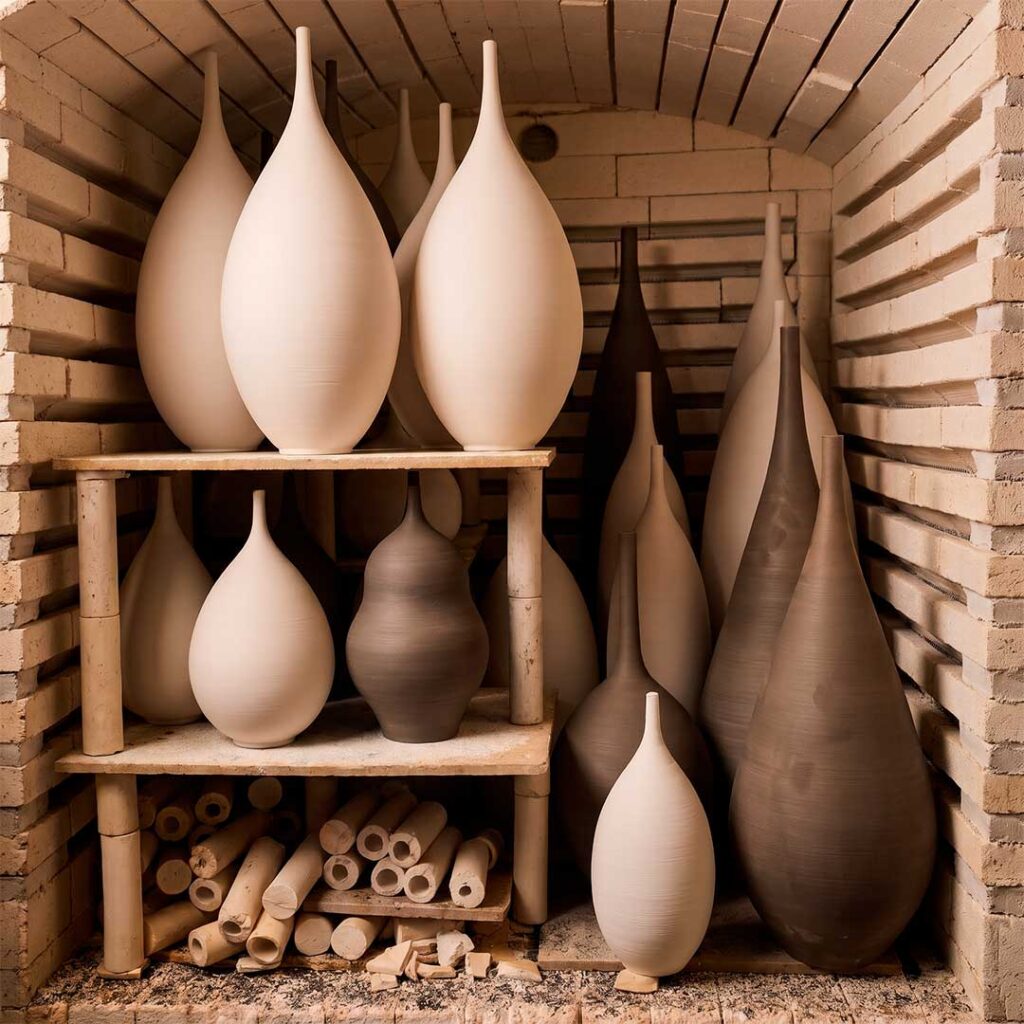
The limited series Unikas Black, Unikas Quartz and the sculptures Moradores reflect this commitment to authenticity. I invite you to browse the pieces available in the shop to find the volume that, by its character and sobriety, is meant to complete your space.
The process on the wheel: watching form being born
Stoneware demands a rigorous technique and, above all, time. There is no way to rush the clay when you are after a balanced line. So you can see up close what the quiet work inside the workshop is like, I invite you to watch this process from start to finish.
In this video I show the complete making of a vase with a spherical body and a narrow neck, starting from a ball of clay of one and a half kilos (3.3 lb). You will see the exact moment of centering, how the cylinder opens from the base while keeping the necessary wall thicknesses, and the precision needed to close the mouth of the piece without the structure collapsing.
(Turn on the subtitles in the player to follow each technical step of the process in detail.)
Frequently asked questions about shipping and delivery
How are decorative vases shipped to make sure they arrive safely?
Each work is packed individually with double high-density protection to withstand transport. Shipping throughout Argentina is free. For the rest of the country, shipping is also free, and the piece arrives flawless at its destination.
How long does delivery of a design object take?
We dispatch the pieces available in the shop within 2 to 5 business days after purchase. The final arrival time depends on the carrier.